
PROCEDURES & SURGERY
Operative & Diagnostic Hysteroscopy
A diagnostic hysteroscopy is a minimally invasive in-office procedure that allows your provider to directly examine the inside of your uterus. It is commonly used to investigate the cause of abnormal uterine bleeding, recurrent miscarriage, or infertility, and to identify structural abnormalities such as polyps or fibroids.
How It Works
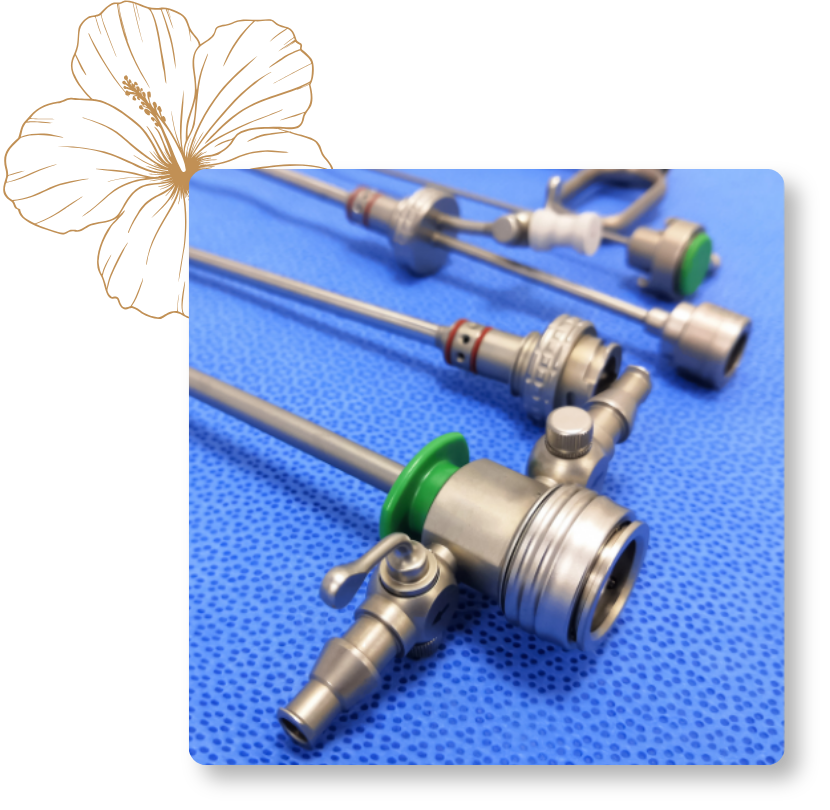
During a diagnostic hysteroscopy, a thin, lighted instrument called a hysteroscope is gently passed through the cervix into the uterine cavity. This gives your provider a clear, direct view of the uterine lining without the need for incisions. Sterile fluid is used to gently expand the cavity and improve visibility.
At Hibiscus Women’s Center, we can often perform the hysteroscopy at the same time as a pelvic ultrasound, allowing us to streamline your evaluation and reduce the number of separate appointments needed. Tissue sampling may also be performed during the procedure if indicated.

What We Are Looking For
Small growths such as polyps and fibroids are common findings during a diagnostic hysteroscopy. These can cause abnormal bleeding, difficulty conceiving, or pregnancy loss.
Once your provider has a clear picture of the uterine cavity, a tailored plan of care can be recommended based on your specific findings and goals.

What to Expect
Most patients experience mild cramping during and briefly after the procedure. It is typically well tolerated and does not require general anesthesia.
Your provider will walk you through what to expect beforehand and discuss your results as soon as they are available.
Operative Hysteroscopy
Diagnostic VS. Operative Hysteroscopy
Both diagnostic and operative hysteroscopy use the same instrument, a thin, lighted tube called a hysteroscope, to examine the inside of the uterus through the cervix. The difference is in the goal. A diagnostic hysteroscopy is performed to evaluate and identify a problem. An operative hysteroscopy goes a step further, using additional instruments passed through the hysteroscope to treat what is found, removing polyps or fibroids, cutting adhesions, or addressing abnormal bleeding. In some cases, both can be performed during the same visit.

Benefits
Operative hysteroscopy allows your provider to treat uterine conditions directly and precisely without the need for incisions or more invasive surgery.
For many patients, it avoids the need for a dilation and curettage (D&C) or hysterectomy.

During the Procedure
The hysteroscope is gently inserted through the cervix into the uterine cavity, which is expanded with sterile fluid to improve visibility.
Specialized instruments are then used to remove or treat the identified tissue. The procedure is typically performed in the office under local anesthesia or conscious sedation.

After the Procedure
Mild cramping or discomfort during the procedure is normal, and mild spotting or dark brown discharge in the days following is expected.
Please avoid the following for 48 hours after your procedure:
- Tampons
- Swimming pools, oceans, hot tubs, or baths

Important Reminders
- Please arrive 30 minutes before your scheduled procedure time.
- If you have been prescribed Valium®, you must have a driver with you. You may not drive yourself or use a rideshare service.
- Do not take acetaminophen (Tylenol®) or ibuprofen before your procedure. Please notify our office if you have already done so.

Have Questions? Ask Elise AI
Elise is your AI health assistant. Get answers to common questions about our services, what to expect, and more.
Ready to schedule an appointment?
Book online in just a few clicks. We’re here to help you feel your best!