
OBSTETRIC SERVICES
Vaginal Birth After Cesarean – VBAC
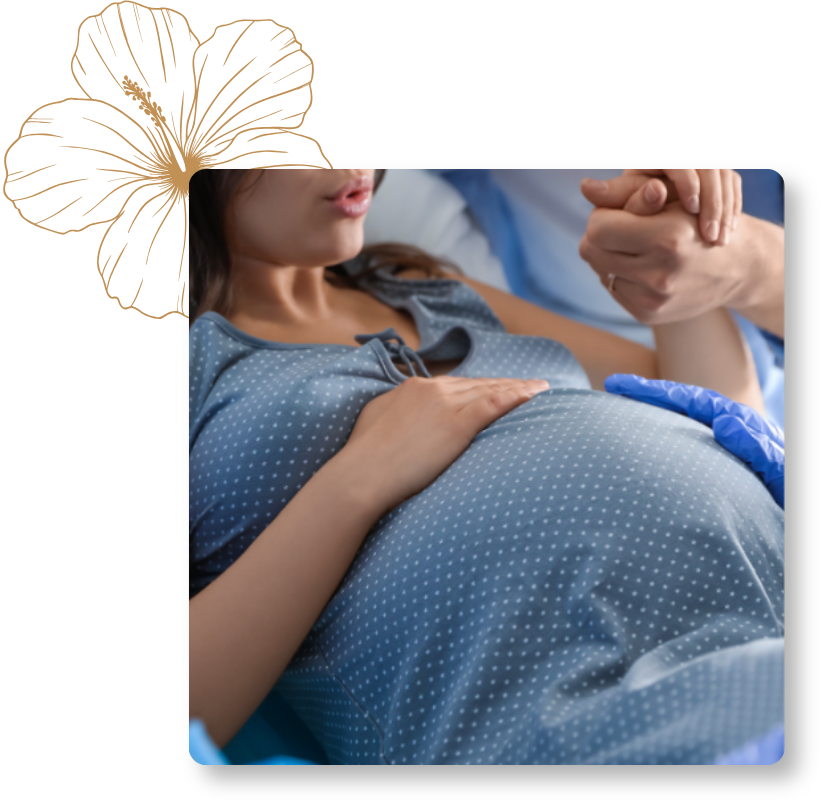
For many patients who have previously had a cesarean delivery, a vaginal birth — known as a vaginal birth after cesarean (VBAC) — may be a safe and successful option for the right candidates.
Our Approach to VBAC
Patients who have had one prior low transverse cesarean (a horizontal incision in the lower part of the uterus) may be good candidates for a trial of labor, but this is not the right path for everyone.
Our physicians evaluate all VBAC candidates at least twice during pregnancy to assess their likelihood of success, using established VBAC success assessment tools.

A Supportive Care Model
Our care model, which pairs CNM-led labor support with 24-hour physician backup, has been shown to support lower cesarean rates overall, which is one of the reasons our team is well suited to support patients pursuing VBAC.
We also welcome early pregnancy consultations for patients who are not currently in our practice but would like an informed, unbiased assessment of their VBAC candidacy. You do not need to transfer your care to us to have that conversation.
Breech Presentation and External Cephalic Version (ECV)
By the final weeks of pregnancy, most babies settle into a head-down position for delivery. When a baby remains in a breech position or a transverse lie, a vaginal delivery may not be safe, and a cesarean delivery is generally considered the safest option.
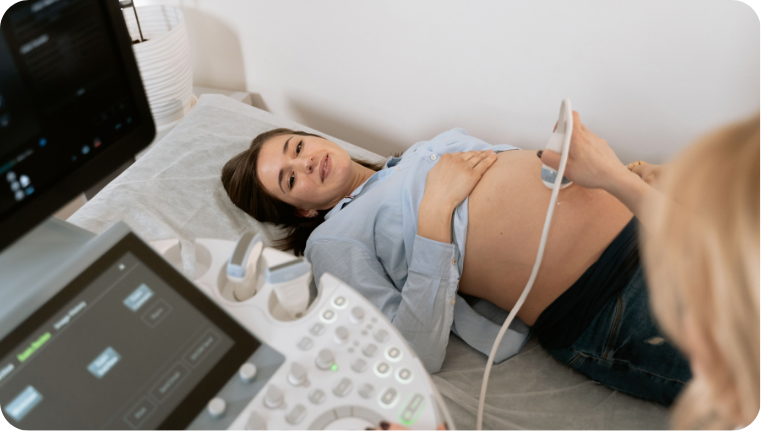
Before defaulting to cesarean, Hibiscus Women’s Center offers external cephalic version (ECV). ECV is a technique in which your physician uses gentle, guided pressure on the outside of your abdomen to manually turn the baby into a head-down position. It is performed in a hospital setting at 37 weeks or later and is successful approximately 50% of the time.
ECV is an option for low-risk obstetric patients whose baby remains in breech or transverse position after 36 weeks. Our physicians will review your individual situation and discuss the risks, benefits, and alternatives with you.
Breech Presentation and External Cephalic Version (ECV)
By the final weeks of pregnancy, most babies settle into a head-down position for delivery. When a baby remains in a breech position or a transverse lie, a vaginal delivery may not be safe, and a cesarean delivery is generally considered the safest option.
Before defaulting to cesarean, Hibiscus Women’s Center offers external cephalic version (ECV). ECV is a technique in which your physician uses gentle, guided pressure on the outside of your abdomen to manually turn the baby into a head-down position. It is performed in a hospital setting at 37 weeks or later and is successful approximately 50% of the time.
ECV is an option for low-risk obstetric patients whose baby remains in breech or transverse position after 36 weeks. Our physicians will review your individual situation and discuss the risks, benefits, and alternatives with you.

Have Questions? Ask Elise AI
Elise is your AI health assistant. Get answers to common questions about our services, what to expect, and more.
Ready to schedule an appointment?
Book online in just a few clicks. We’re here to help you feel your best!